

Australian Museum collections
The Australian Museum has spent more than 190 years building a vast collection.



The Australian Museum's mission is ignite wonder, inspire debate and drive change.
Our Vision is to be a leading voice for the richness of life, the Earth and culture in Australia and the Pacific. We commit to transform the conversation around climate change, the environment and wildlife conservation; be a strong advocate for First Nations’ culture; and continue to develop world-leading science, collections, exhibitions and education programs.
Part of how we do this is by using the vast Australian Museum collections to research, interpret and communicate our understanding of the environments and cultures of the Australian region to increase their long-term sustainability. The collections provide a reference to the fauna, geology and cultural heritage of Australia and Pacific region, with over 21.9 million objects and specimens alongside an enviable reputation for world-leading science.
We carefully protect the collection and continue to support important research, fieldwork and expeditions. These activities improve our knowledge and understanding of issues of natural, scientific and cultural significance.
Our vision for the future includes increasing the impact of our science and finding new ways to preserve and future-proof our vast and valuable collection for generations to come.
Our collections
It is estimated that, in total, the Australian Museum collections contain in excess of 21 million objects including cultural material and specimens of animals, fossils and minerals, which represent a readily accessible portion of our world.
Specimens are natural objects, such as minerals, animals and fossils which form part of an organised collection.
Cultural objects are items that have been made by people for a particular use. These include domestic, trade, ceremonial and artistic objects.
Each specimen and object has a label which holds essential information, including the date and location of its collection and the name of its collector. The label has a unique registration number which is used to keep track of the specimen or object and its associated information. This information, or data, is then entered into an electronic database.
Without these data, the scientific and cultural value of each specimen or object would be greatly reduced. Data give an insight into a cultural object's affiliation and use, or records the environment and circumstances in which a specimen was collected. Without this contextual information a meaningful study of the object or specimen can be very difficult.


Frequently asked questions
After collecting for more than 190 years, the Australian Museum collections are immense. It is estimated that, in total, the Australian Museum collections contain in excess of 21 million objects and specimens in the Natural Science and Cultural Collections.
Natural Science Collections
Arachnology collection - contains more than 635,000 specimens. This includes about 2500 type lots of which about 750 are primary types.
Entomology collection - contains approximately four million specimens, including around 9500 type specimens.
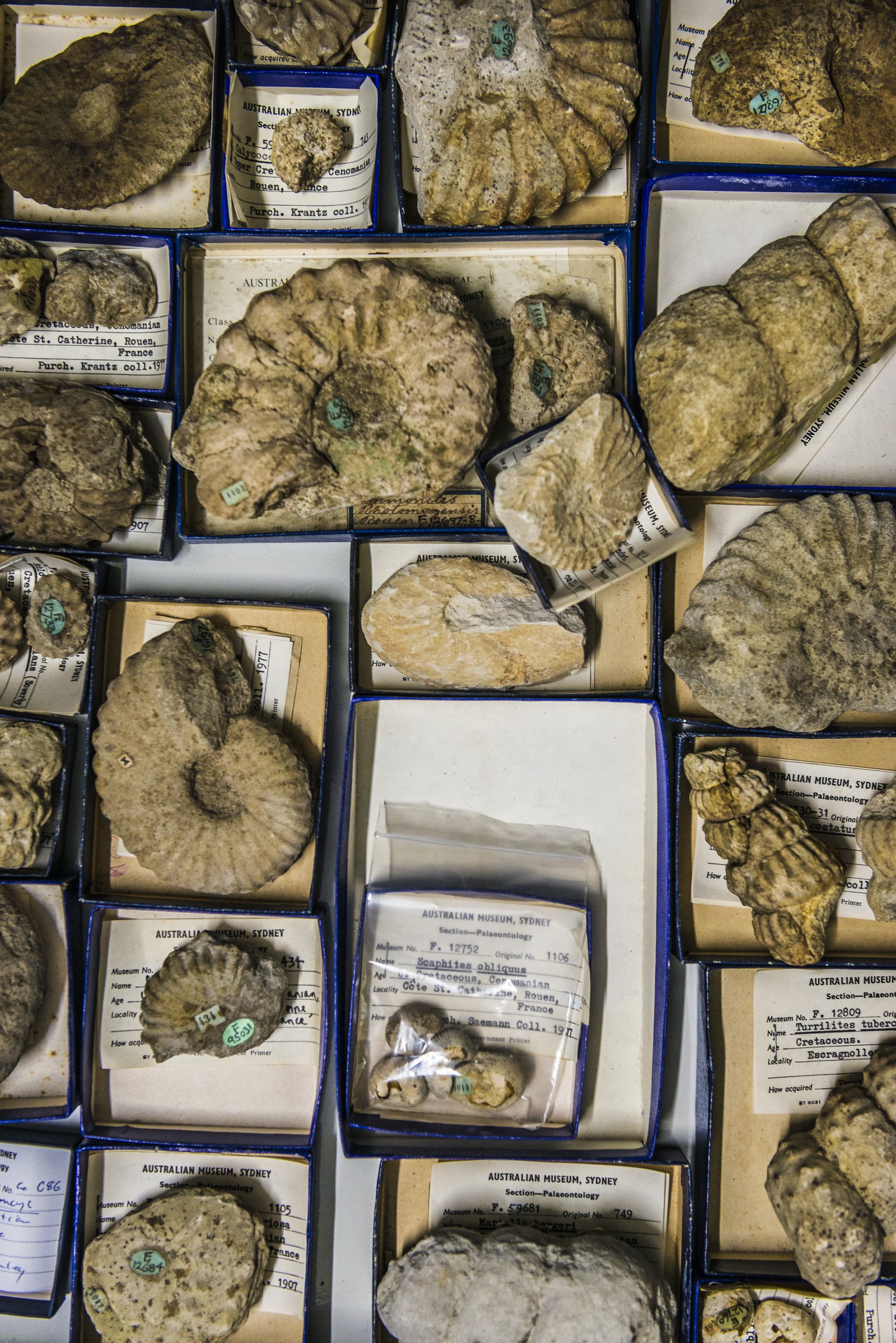
Fossil collection - contains more than 167,000 specimens of fossil invertebrates, vertebrates and plants, most of which are Australian.
Herpetology collection- has more than 170,000 registered specimens of reptiles and amphibians from New South Wales, Queensland, Northern Territory, Papua New Guinea and the islands of the South Pacific. The collection holds over 3800 type specimens, including 541 primary types.
Ichthyology collection - contains more than 600,000 adult fish specimens and over 1,000,000 larval (baby) fish specimens. The collection includes 10,909 type specimens. The Regional Larval Fish Archive contains over 300,000 larvae from over 8000 collection samples.
Malacology collection - contains more than four million specimens more than 10,000 type lots, including more than 4700 primary types.
Mammalogy collection - contains approximately 47,000 specimens from over 80 different countries. Among the most important specimens in the collection are the more than 400 mammal type specimens.
Marine Invertebrate collection has more than 1.6 million registered specimens, microscope slides, SEM (Scanning Electron Microscope) stubs and photographic images. The collection includes more than 9000 type lots, including more than 2000 primary types
Mineral collection - has more than 76,000 specimens, covering 1290 mineral species. There are about 500 cut gemstones The rock collection contains about 17,400 specimens. The meteorite collection has more than 710 specimens and the tektite collection has approximately 1000 specimens.
Ornithology collection - contains more than 90,000 registered specimens, including study skins, bones, tissues, mounts, detached wings, spirit specimens, nests and over 20,000 registered clutches of eggs. There are more than 340 type specimens in the collection, primarily from Australia and the Pacific Islands.
Cultural Collections
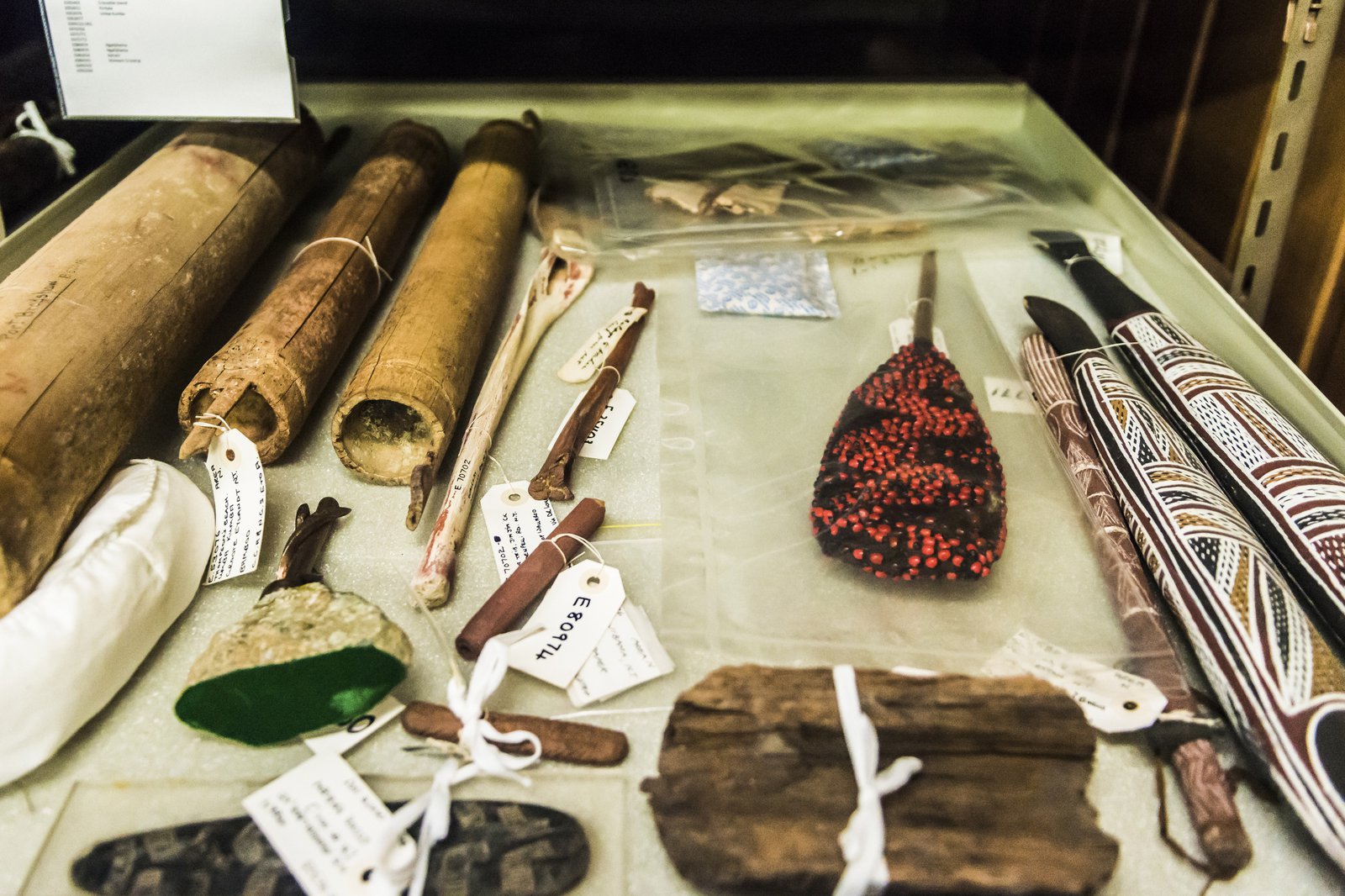
Aboriginal and Torres Stait Islander collection - holds approximately 40,000 ethnographic objects and one million archaeological artefacts representing the cultures of Aboriginal and Torres Strait Islander Australians.
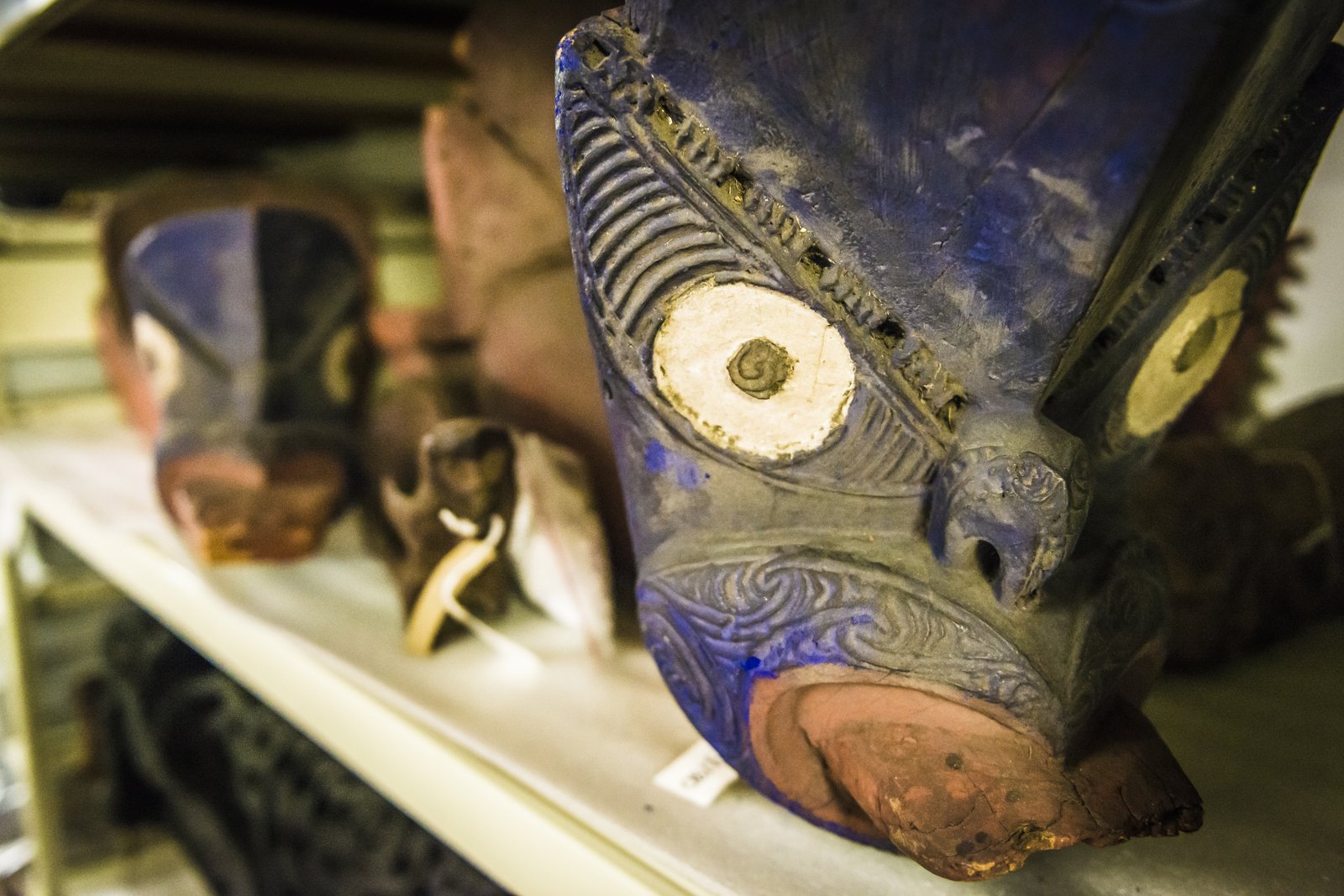
Pacific collection - there are approximately 60,000 ethnographic objects from Melanesia, Polynesia and Micronesia in the Pacific Collection.
Asia, Africa and Americas collection -the ethnographic collections from these regions are geographically broad and culturally varied, with approximately 16,000 items representing the material culture of Indigenous peoples throughout the world.
The Australian Museum collections are a valuable information resource for the whole community.
Scientists, researchers, academics, students, indigenous communities and individuals from Australia and other countries use this resource to enhance their knowledge. Much of the information gained by accessing this resource is published in scientific papers. The information is then available to a wide audience.
First Nat communities use the cultural objects in the collections to maintain, develop and share their cultural identity and knowledge. The continued use of these cultural objects provides vital links with important aspects of their culture
The Australian Museum collections have been accumulated over the last 190 years on the basis of their scientific and cultural value. The value of the collections lies in their contribution to scientific understanding, cultural identity, environmental management and conservation, encouraging sustainable development, education, interpretation, public enjoyment and inspiration. As such, they are largely irreplaceable - and priceless.
Without an actual specimen or object, problems can arise if the validity of a record based on a photograph is ever questioned.
A photographic record and even a sight record can be very useful. It can greatly enhance the value of a specimen or object and form an important part of the data collected. A photograph can capture details such as the bright colour of most seaslugs which is lost once the specimen is preserved. Photographs can also record a specimen or object in its natural habitat or cultural setting, and record movements too fast for the human eye. Macro photography, scanning electron microscope (SEM) images and x-rays also provide information often not visible to the naked eye without damaging the specimen.
Without an actual specimen or object, however, problems can arise if the validity of a record is ever questioned. A photograph often doesn't display important characteristics or any internal features that may be required to confirm the identification of the specimen or help in a revised identification based on new data. There are also many species which stay hidden and can only be found using intensive collecting techniques. These could never be photographed.
Providing access to its collections is one of the Australian Museum's most important functions. You view curated collections every time you visit the Museum. Our website, outreach programs and publications also give further access to the vast wealth of information in our collections.
The Museum also has an active loan program with research and educational institutions around the world. We also welcome visiting national and international scientists and students who wish to study specimens and objects in our collections.
Through outreach programs, the Museum provides First Nations communities access to their cultural objects held in its collections. For example many Aboriginal communities are establishing and maintaining their own museums, called 'Cultural Centres' or 'Keeping Places' and developing cultural exhibitions within them. Museum staff work with communities to produce these exhibits using objects from the Australian Museum's collections and local knowledge within the community.
The AM also undertakes the repatriation of significant cultural objects and ancestral remains to indigenous communities both within Australia and overseas. These objects and remains have immense spiritual and cultural meaning to First Nations people and the Australian Museum holds these values above any other interests.
The Australian Museum greatly appreciates the many kind offers we receive each year from people looking to donate items for our natural history and cultural collections.
Unfortunately, with over 21 million items in our scientific and cultural collections, the space and curatorial capacity we have for new collection items is very limited.
New acquisitions are subject to a rigorous and extensive process of analysis and review to ensure they represent the best possible fit with our existing collections, public programs and research priorities.
Gifts to the AM collections
Steven & Janine Avery
Ursula Burgoyne
Sam & Louise Dawson
Rod & Robyn Dent in honour of Pat Dent & the Wanindilyaugwa tribe
Charles M Ellias
The late Paul L Fischer
John L Gordon
Robin Guthrie
Mark Hanlon
J Holliday
The late John Hume
Raymond Kirby AO & Mrs Deirdre Kirby
Roger Langmead
David Leece
Leighton Llewellyn
Belinda Mason & Dieter Knierim
James McColl
Mineralogical Society of NSW Inc
Dr Max Moulds
George & Edna Oakes
Dorothy O’Reilly
John Rankin
Dr William Rieger
John Rohde
Paul Scully-Power AM
Michael Shea
Trevor Shearston
The late Muriel Snell
George Stacey
Prof Gunther Theischinger
The late Margaret Tuckson
David Twine
Janet Walker
Anonymous
Ask an expert
Have a question that you can't research yourself? Found an animal at home that you can't identify?
We can help