

Smalltooth Cookiecutter Shark
 Click to enlarge image
© Michael Miller
Fast Facts
-
Classification
- Genus
- Isistius
- Species
- brasiliensis
- Family
- Dalatiidae
- Order
- Squaliformes
- Class
- Chondrichthyes
- Subphylum
- Vertebrata
- Phylum
- Chordata
- Kingdom
- Animalia
-
- Size Range
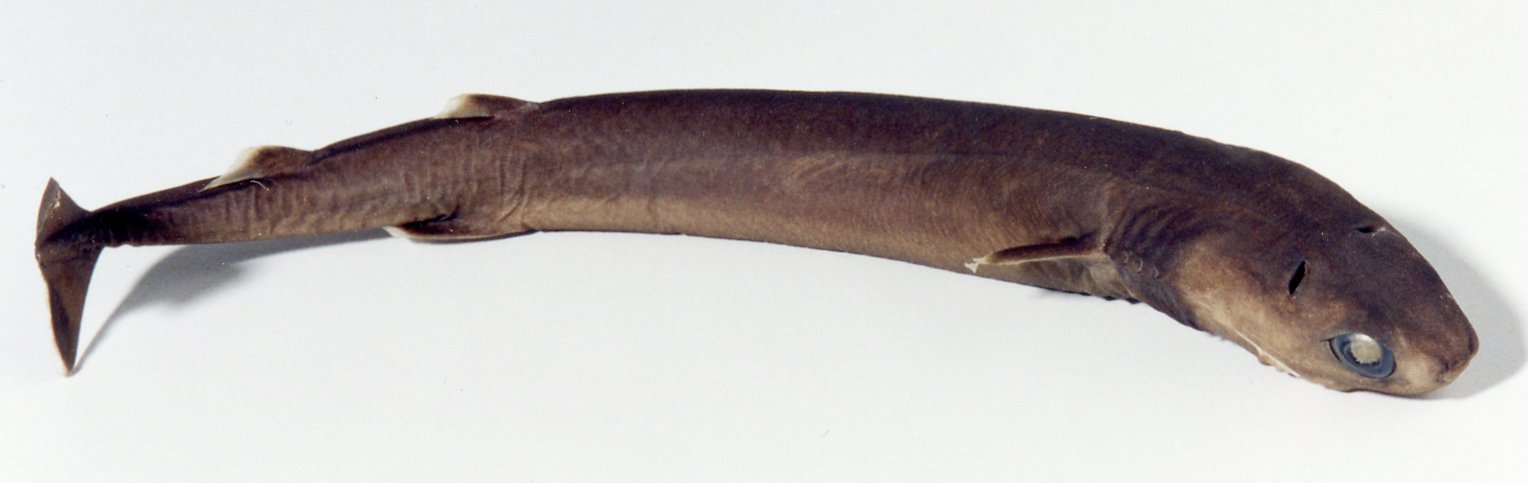
- It grows to about 50 cm in length
Introduction
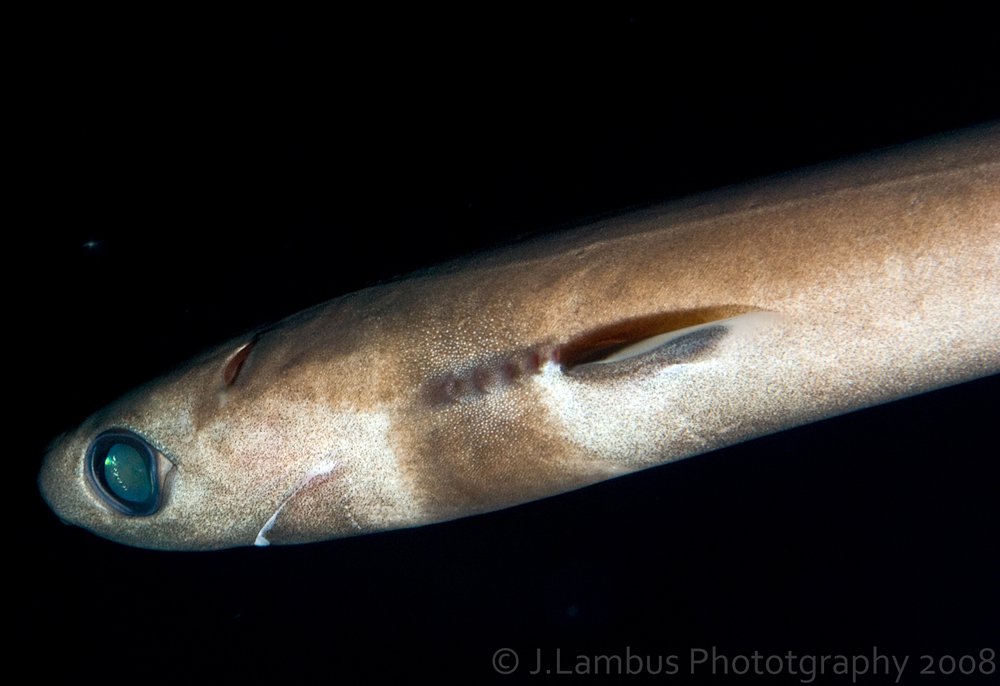
The Smalltooth Cookiecutter Shark is named after the cookie-shaped wounds that it leaves on the bodies of larger animals. It attaches itself to its prey with its suctorial lips, and then spins to cut out a cookie-shaped plug of flesh from the larger animal.
What do Smalltooth Cookiecutter Sharks look like?
Identification
This species has small, erect teeth in the upper jaw and large triangular teeth in the lower jaw. The appropriately named Largetooth Cookiecutter Shark, is the second species in the genus Isistius. The two species can be separated by tooth numbers, colouration and fin positions.


Where do Smalltooth Cookiecutter Sharks live?
Habitat
They vertically migrate, being found in deep water, probably below 1000 m during the day, and migrating into surface waters at night.
Sharks online publication
Delve into the world of Sharks and explore the digital publication with videos and extra content from the exhibition. Hear from First Nations peoples, scientists and conservationists as they share their stories about these ancient survivors.
Explore nowDistribution
Cookiecutter Sharks are recorded from scattered localities around the world. In Australia they have been recorded from Queensland, New South Wales, Tasmania and Western Australia.
The map below shows the Australian distribution of the species based on public sightings and specimens in Australian Museums. Click on the map for detailed information. Source: Atlas of Living Australia.
What do Smalltooth Cookiecutter Sharks eat?
Feeding and diet
The Smalltooth Cookiecutter Shark attaches itself to its prey with its suctorial lips, and then spins to cut out a cookie-shaped plug of flesh. Many species show evidence of attacks , including White Sharks.

© Marta Eusebio

© Australian Museum
Widder (1998) suggested that the feeding behaviour of the Smalltooth Cookiecutter Shark may be even stranger than originally thought. The fish is counterilluminated - the ventral light organs making the fish appear darker above and lighter below.
The dark-pigmented collar is not illuminated, so would appear silhouetted against the light from above. The theory suggests that this dark area would look like a small fish from below, and the Smalltooth Cookiecutter Shark would wait for a larger predator to attack the "small fish". As the predator is about to attack, the Smalltooth Cookiecutter Shark would turn and attack the attacker. The forward motion of the larger animal may even assist the Smalltooth Cookiecutter Shark in removing a plug of flesh.

Leopard Seal with Cookiecutter Shark bite
Image: Martin Lange© Martin Lange
Are Smalltooth Cookiecutter Sharks dangerous?
Danger to humans
In their 2011 paper (see references, below), Honebrink and colleagues describe the first documented attack on a live human by a Cookiecutter Shark.
References
- Compagno, L.J.V. 1984. FAO species catalogue. Vol. 4, Sharks of the World. An annotated and illustrated catalogue of shark species known to date. Part 1 - Hexanchiformes to Lamniformes: viii, 1-250.
- Gadig, O.B.F. & U.L. Gomes. 2002. First report on embryos of Isistius brasiliensis. Journal of Fish Biology. 60: 1322-1325.
- Honebrink, R., Buch, R., Galpin, P., & G. Burgess. 2011. First Documented Attack on a Live Human by a Cookiecutter Shark (Squaliformes, Dalatiidae: Isistius sp.). Pacific Science. 65(3): 365-374.
- Last, P.R. & J.D. Stevens. 1994. Sharks and Rays of Australia. CSIRO. Pp. 513, Pl. 1-84.
- McGrouther, M.A. 1994. Cookie Cutter Capers. Muse. Australian Museum News and Events. Dec - Jan: 4,11.
- Papastamatiou Y.P., Wetherbee, B.M., O’Sullivan, J., Goodmanlowe, G.D. & C.G. Lowe. 2010. Foraging ecology of Cookiecutter Sharks (Isistius brasiliensis) on pelagic fishes in Hawaii, inferred from prey bite wounds. Environmental Biology of Fishes. 88: 361-368.
- Widder, E.A. 1998. A predatory use of counterillumination by the squaloid shark, Isistius brasiliensis. Environmental Biology of Fishes. 53: 267-273.

