Site navigation
-
Wildlife of Sydney
- Wildlife of Sydney
- Habitats of Sydney
- Crustaceans
- Lace corals and sea mats
- Jellyfish, anemones and corals
- Frogs
- Frogs: Class Amphibia
- Bleating Tree Frog
- Brown Toadlet
- Common Eastern Froglet
- Dainty Tree Frog
- Eastern Dwarf Tree Frog
- Eastern Pobblebonk Frog
- Giant Barred Frog
- Giant Burrowing Frog
- Green and Golden Bell Frog
- Green Tree Frog
- Haswell's Froglet
- Jervis Bay Tree Frog
- Leaf Green Tree Frog
- Lesueur's Frog
- Peron's Tree Frog
- Red-crowned Toadlet
- Red-eyed Tree Frog
- Rocket Frog
- Sandpaper Frog
- Striped Marsh Frog, Limnodynastes peronii, Duméril and Bibron 1841
- Spotted Marsh Frog
- Tusked Frog
- Tyler's Toadlet
- Verreaux's Tree Frog
- Insects
- Ant-raiding Ant
- Bull ants
- Funnel Ant
- Golden-spined Ant
- Green-head Ant
- Meat Ant
- Spider Ant
- Sugar Ant
- Common Blue-banded Bee
- Common Wasp-mimic Bee
- Cuckoo bees
- Feathery Leioproctus Bee
- Honey Bee
- Leafcutter Bee
- Masked bees
- Nomia bees
- Peacock Carpenter Bee
- Reed bees
- Stingless Bee
- White-banded bees
- Braconid wasps
- Cuckoo wasps
- Diapriid wasps
- European Wasp
- Fig wasps
- Flower wasps
- Hatchet wasps
- Ichneumonid wasps
- Mud-dauber Wasp
- Paper wasps
- Potter wasps
- Sand wasps
- Spider wasps
- Velvet ants
- Steel-blue sawflies
- Australian Carpet Beetle
- Beach rove beetles
- Bess Beetle
- Blue Mountains Firefly
- Bombardier Beetle
- Christmas Beetle
- Click beetles
- Darkling Beetle
- Feather-winged beetles
- Flat African Dung Beetle
- Jewel Beetle
- Lesser Grain Borer
- Long-nosed Lycid Beetle
- Orchid Beetle
- Paropsine Beetle
- Plague Soldier Beetle
- Powder Post Borer
- Pumpkin Beetle
- Punctate Flower Chafer Beetle
- Transverse Ladybird
- Three-punctured Diving Beetle
- Whirligig Beetle
- Bronze Orange Bug
- Cotton Harlequin Bug
- Crusader Bug
- Feather-legged Assassin Bug
- Floury Baker
- Giant Water Bug
- Greengrocer
- Green Vegetable Bug
- Termite Assassin Bug
- Australian Painted Lady
- Blue Triangle Butterfly
- Cabbage White Butterfly
- Caper White Butterfly
- Common Brown Butterfly
- Common Imperial Blue Butterfly
- Common Grass Blue
- Bronze Flat Butterfly
- Macleay's Swallowtail
- Meadow Argus Butterfly
- Orange Palm Dart
- Orchard Butterfly
- Wanderer Butterfly
- Yellow Admiral
- Emperor Gum Moth
- Giant Wood Moth
- Grapevine Moth
- Privet Hawk Moth
- Scribbly Gum Moth
- White-stemmed Gum Moth
- Fiery Skimmer
- Mountain Tigertail dragonfly
- Pygmy Shutwing
- South-eastern Petaltail
- Sydney Hawk Dragonfly
- Waterfall Redspot
- Balsam Beast
- Black Field Cricket
- Blackish Meadow Katydid
- Common Garden Katydid
- Common Macrotona Grasshopper
- Common Pyrgomorph
- Illawarra Raspy Cricket
- Mole Cricket
- Sydney Gum Leaf Katydid
- Flat Cockroach
- German Cockroach
- Native Cockroaches
- False Garden Mantid
- Purple-winged Mantid
- Australian Sheep Blowfly
- Biting midges
- Crane flies
- House Fly
- Hover flies
- March flies
- Mosquitoes
- Robber flies
- Vinegar Fly
- Reptiles
- Snakes, lizards and other reptiles
- Broad-headed Snake
- Common Death Adder, Acanthophis antarticus, Shaw and Nodder 1802
- Diamond Python
- Green Turtle
- Eastern Brown Snake
- Eastern Snake-necked Turtle
- Water Dragon, Physignathus lesueurii, Gray 1831
- Fence Skink
- Red-bellied Black Snake
- Southern Leaf-tailed Gecko
- Birds
- Birds: Aves
- Birds in Backyards: top 30 urban birds
- Australian Pelican
- Bar-tailed Godwit
- Black-faced Cuckoo-shrike
- Black Kite
- Common Bronzewing
- Common Koel
- Flame Robin
- Galah
- Golden Whistler
- Great Cormorant
- Great Egret
- House Sparrow
- Laughing Kookaburra
- Little Pied Cormorant
- Masked Lapwing
- Pallid Cuckoo
- Pied Oystercatcher
- Rainbow Lorikeet
- Sulphur-crested Cockatoo
- Tawny Frogmouth
- Yellow-tailed Black-Cockatoo
- Spiders
- What are spiders?
- Bird-dropping spiders
- Black House and Grey House Spiders
- Daddy-long-legs Spider
- Flower Spiders
- Garden Orb Weaving Spiders
- Golden Orb Weaving Spiders
- Ground spiders
- Huntsman Spiders
- Jumping spiders
- Magnificent Spider
- Net-casting Spiders
- Redback Spider
- Sac Spiders
- Silver Orb Weaving Spiders
- Spotted Ground Spiders
- Sydney Funnel-web Spider
- Trapdoor Spiders
- Wolf Spiders
- Centipedes and millipedes
- Sea squirts and cunjevoi
- Sea stars, sea urchins and other echinoderms
- Mammals
- Mammals: Mammalia
- Australian Fur Seal
- Black Rat
- Bottlenose Dolphin
- Bush Rat
- Common Bent-wing Bat
- Common Brushtail Possum
- Common Ringtail Possum
- Feathertail Glider
- Grey-headed Flying-fox
- House Mouse
- Humpback Whale
- Koala
- Long-nosed Bandicoot
- Short-beaked Echidna
- Southern Brown Bandicoot
- Southern Right Whale
- Spotted-tailed Quoll
- Sugar Glider
- Swamp Wallaby
- Water-rat
- Freshwater fish
- Sharks and rays
- Common Stingaree, Trygonoptera testacea Müller & Henle, 1841
- Eastern Shovelnose Ray, Aptychotrema rostrata (Shaw & Nodder, 1794)
- Greynurse Shark, Carcharias taurus Rafinesque, 1810
- Port Jackson Shark, Heterodontus portusjacksoni (Meyer, 1793)
- Spotted Wobbegong, Orectolobus maculatus (Bonnaterre, 1788)
- White Shark, Carcharodon carcharias (Linnaeus, 1758)
- Marine fishes
- Australian Mado, Atypichthys strigatus (Günther, 1860)
- Bigbelly Seahorse, Hippocampus abdominalis Lesson, 1827
- Blacktip Bullseye at South Solitary Island
- Eastern Blue Devil, Paraplesiops bleekeri
- Eastern Blue Groper, Achoerodus viridis (Steindachner, 1866)
- Eastern Frogfish, Batrachomoeus dubius (White, 1790)
- Eastern Wirrah, Acanthistius ocellatus (Günther, 1859)
- Fanbelly Leatherjacket, Monacanthus chinensis (Isbeck, 1765)
- Fortescue, Centropogon australis (White, 1790)
- John Dory, Zeus faber Linnaeus, 1758
- Luderick, Girella tricuspidata (Quoy & Gaimard, 1824)
- Mulloway, Argyrosomus japonicus (Temminck & Schlegel, 1844)
- Old Wife, Enoplosus armatus (White, 1790)
- Peppered Sole, Aseraggodes sp
- Pineapplefish, Cleidopus gloriamaris De Vis, 1882
- Red Indianfish, Pataecus fronto Richardson, 1844
- Red Morwong, Cheilodactylus fuscus (Castelnau, 1879)
- Eastern Red Scorpionfish, Scorpaena cardinalis Richardson, 1842
- Sand Whiting, Sillago ciliata Cuvier, 1829
- Sergeant Baker, Hime purpurissatus Richardson, 1843
- Silver Biddy, Gerres subfasciatus (Cuvier, 1830)
- Snapper, Pagrus auratus
- Sydney Cardinalfish, Apogon limenus (Randall & Hoese, 1988)
- Trumpetfish, Aulostomus chinensis (Linnaeus, 1766)
- Weedy Seadragon, Phyllopteryx taeniolatus (Lacépède, 1804)
- White's Seahorse, Hippocampus whitei Bleeker, 1855
- Molluscs
- Overview of molluscs - Phylum Mollusca
- Non-marine Molluscs
- Blacklip Abalone
- Black Nerites
- Blue-lined Octopus
- Blue mussels
- Cart-rut Shell
- Common Pipi
- Common Sydney Octopus
- Elephant Snail
- Garden Snail
- Giant Cuttlefish
- Ischnochiton australis
- Leopard Slug
- Limpets
- Little Blue Periwinkle
- Red Triangle Slug
- Sea Hare
- Squid
- Sydney Cockle
- Sydney Mud Whelk
- Sydney Rock Whelk
- Turban Snail
- Violet Snail
- Zebra Snail
- Sponges
- About the Museum
- What's on
- Visiting the Australian Museum
ANIMAL SPECIES:Old Wife, Enoplosus armatus (White, 1790)
The derogatory standard name of the species apparently refers to the sound made when a fish is caught on hook and line. The teeth are ground together supposedly producing the sound of an 'old wife'.
Identification
The Old Wife is easily recognised by its distinctive shape and colouration. It has a deep body, and two separate dorsal fins, the second being sickle-like.
The body is silver-white to brown and has six to eight black bands of variable width.
Juveniles are more elongate than adults and have a blotched colour pattern and a white-rimmed spot on the soft dorsal fin.
The Old Wife was given its rather derogatory name in reference to the sound it makes by grinding its teeth after it is caught.
Enoplosus armatus is the only species in the family Enoplosidae.
Size range
The species grows to 25 cm.Distribution
The Old Wife is endemic to Australia. It is found in southern waters from southern Queensland to south-western Western Australia.
Distribution by collection data
Biomaps map of Old Wife specimens in the Australian Museum collection.
Habitat
Adults are common on coastal reefs, often seen as solitary individuals or in pairs, but will also form large schools. Juveniles live in estuaries.
Behaviour and adaptations
Feeding and Diet
The species is carnivorous, eating primarily crustaceans and worms.
Other behaviours and adaptations
The dorsal fin spines of the Old Wife contain a venom which can cause severe pain.
Classification
- Species:
- armatus
- Genus:
- Enoplosus
- Family:
- Enoplosidae
- Order:
- Perciformes
- Class:
- Actinopterygii
- Subphylum:
- Vertebrata
- Phylum:
- Chordata
- Kingdom:
- Animalia
References
- Glover, C.J.M. in Gomon, M.F., C.J.M. Glover & R.H. Kuiter (Eds). 1994. The Fishes of Australia's South Coast. State Print, Adelaide. Pp. 992.
- Gomon, M.F., Bray, D. & R.H. Kuiter (Eds). 2008. The Fishes of Australia's Southern Coast. Reed New Holland. Pp. 928.
- Hutchins, B. & R. Swainston. 1986. Sea Fishes of Southern Australia. Complete Field Guide for Anglers and Divers. Swainston Publishing. Pp. 180.
- Kuiter, R.H. 1993. Coastal Fishes of South-Eastern Australia. Crawford House Press. Pp. 437.
- Kuiter, R.H. 1996. Guide to Sea Fishes of Australia. New Holland. Pp. 433.
Mark McGrouther
, Collection Manager, Ichthyology
Last Updated: 29 April 2010
Would you like to add a comment?
Sign up to add comments and find out more about the other benefits you can enjoy.
Would you like to add a tag?
Sign up to add tags and find out more about the other benefits you can enjoy.
Related items
Old Wife, Enoplosus armatus View full size
David and Leanne Atkinson
© David and Leanne Atkinson
Old Wife at Cabbage Tree Island View full size
David and Leanne Atkinson
© David and Leanne Atkinson
Schooling Old Wife View full size
David and Leanne Atkinson
© David and Leanne Atkinson
Juvenile Old Wife View full size
Mark McGrouther
© Australian Museum
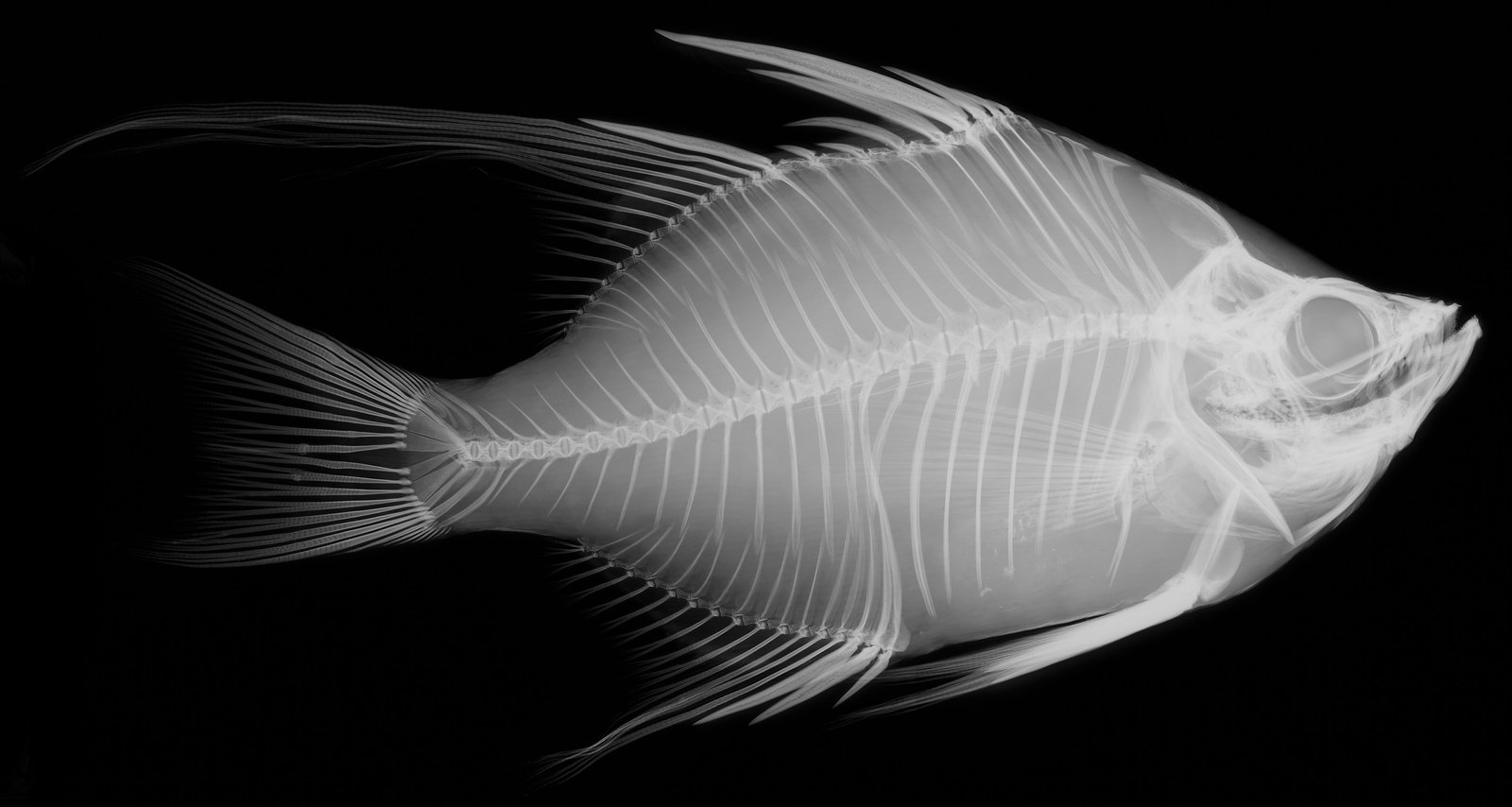
X-ray image of an Old Wife View full size
James King
© Australian Museum
Support us
Help us continue to provide quality research, education, community programs and exhibitions.
Online Shop
Featuring a selection of products relating to the collections.
Australian Museum Members
Join today to come to the Museum for free and enjoy many other benefits.
AMBS
Australian Museum Business Services - Ecological, archaeological and heritage consulting.
Museum as a Venue
We have many unique venues ideal for dinner, cocktails, weddings and conferences.
news
Michael Harvey
18 May 2010
We have had a very busy week - lots happening - all over the Museum...
Lynda Kelly
25 April 2010
A new study from the International Center for Media & the Public Agenda (ICMPA) at the University of Maryland suggests that we are.
what's new
what's popular
- Australian Museum Ornithology Collection
- Warty Prowfish, Aetapcus maculatus (Günther, 1861)
- Australian Museum Palaeontology Collection
- Palorchestes: A tale of misidentification
- Australian Museum Mammalogy Collection
- Mammals: Mammalia
- Wasps: Suborder Apocrita
- Chitons - Class Polyplacophora
- Clams, mussels, pipis and oysters - Class Bivalvia
- Octopus, squid and cuttlefish - Class Cephalopoda
recent comments
QiaCube DNA extraction robot
Hi Mark
It is actually a small washing machine..... for DNA. The QiaCube takes broken up cells and...
Common Stargazer, Kathetostoma laeve (Bloch & Schneider, 1801)
Hi Derek, Thank you for your comment. I appreciate your input. Telling me that you caught a fish north...