Moths, butterflies and skippers: Order Lepidoptera

Butterflies and moths are a group of insects known as lepidopterans, which means 'scaly wings'. It is these overlapping scales that give them their spectacular colours and patterns.

Butterfly

Butterfly
© Australian Museum

Moths, butterflies and skippers (Order Lepidoptera) are some of the most conspicuous and familiar insects. Butterflies in particular are probably one of the few insects that receive more positive than negative media coverage. They have great popular appeal, with some species being conservation icons.

Adult insects of the Order Lepidoptera can be characterised by the presence of scales on the wings and other external parts of the insect. The name of the order reflects this, with 'lepido' meaning scaly, and 'ptera' referring to wings. The mouthparts of adults (when present) are generally tubular, and are adapted for taking in liquids such as the nectar from flowers. Adults usually have two pairs of wings. Within the Sydney region, there are several hundred species of lepidopterans and about 100 of these are butterflies.

The larvae are often referred to as 'caterpillars', or sometimes 'grubs'. They have chewing mouthparts and mostly feed on plants. In some species, the larvae can be serious agricultural pests.
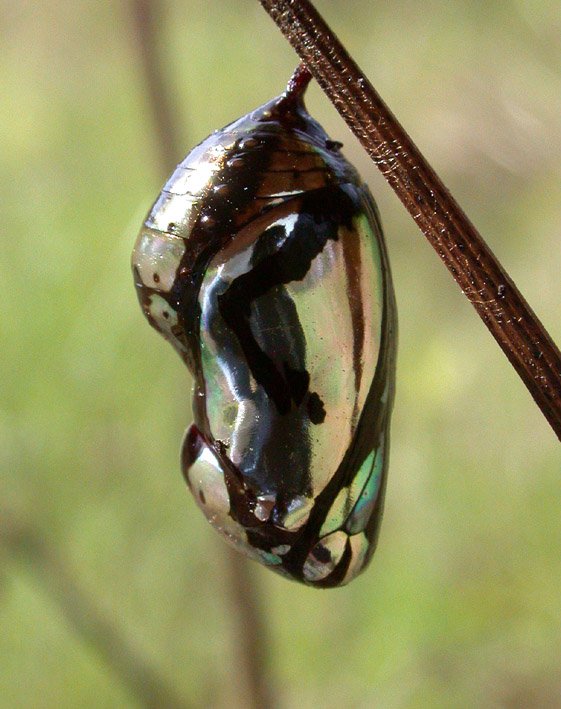
A pupal stage is present between the larval and adult stages. This stage is sometimes protected from predators and parasites by a cocoon, or by a shelter built by the larva, or by being underground. Many butterfly pupae rely on being camouflaged to avoid being eaten.

The Order Lepidoptera is extremely diverse, with over 10 000 Australian species described and an additional 10 000 undescribed species. It is estimated that many more are yet to be recognised, and the total number of Australian species may be as high as 30 000.

Butterflies and moths differ in a number of ways, although there are always exceptions to the rules. The main differences include:

  • Butterflies are active during the day; moths are active at night.
  • Butterflies have knobs at the end of their antennae; moths have antennae without knobs at the end.
  • Butterflies are usually brightly coloured; moths are usually dull.
  • Butterflies rest with their wings held vertically; moths rest with their wings flat.

Like all insects, butterflies and moths go through metamorphosis (that is, they look different at different stages of their life cycle). During the caterpillar stage they spend their time feeding mostly on plants, to the annoyance of some gardeners. Adult moths and butterflies spend their short lives searching for a mate and feeding on nectar from flowers. They have no jaws, but feed via a tube-like tongue, known as a proboscis. Some adults don't even feed at all and rely on the energy they consumed as caterpillars.

In general, moths are named according to the habits of their caterpillars, whereas butterflies are named after the characteristics of the adults.

For enquiries relating to these insects in the Australian Museum collection please contact the Collection Manager


Dr Dave Britton , Collection Manager, Entomology
Last Updated:

Tags moths, butterfly, insects, arthropods, arthropoda, identifying, identification,

13 comments

andrewhodgson - 8.03 AM, 08 March 2012
Hi Dave, I hope you're well. Any follow-up on my possible Dichromodes sp (from my last message - 18th October? Hope you are able to help, Best wishes Andrew
andrewhodgson - 7.10 AM, 19 October 2011
Thank you Dave, and please pass on my thanks to Ted. He identified various moths for me when I lived in Adelaide. The moth he identified yesterday isn't in the Common book, so I'd never have found out what it was! I've attached a small geometrid this time - perhaps a Dichromodes species, although it doesn't have the typical sharp zigzag patterns on the wings. Thanks for any help you can give. Best wishes, Andrew

Comment Attachment

Dave Britton - 11.10 AM, 18 October 2011

Hi Andrew,

Ted Edwards from CSIRO Entomology identified this as Elusa semipecten (Noctuidae). The taxonomic position of this genus of moths is not clear. It is not in the Plusiinae, but at the moment is not associated with the other noctuid subfamilies.

andrewhodgson - 8.10 AM, 18 October 2011
Hi Dave, Here's another Adelaide Hills moth - can't find any matching images anywhere, but from body shape it looks like a Plusiinae species (albeit without metallic forewing markings). Any idea? Many thanks for any help you can give, Best wishes, Andrew

Comment Attachment

andrewhodgson - 8.09 AM, 20 September 2011
That's really super - thanks Dave.
Dave Britton - 8.09 AM, 19 September 2011

Hi Andrew,

It is not that genus; they are much smaller moths (quarter of the size of this species) in a different noctuoid subfamily/family depending on which higher classification you use. This species is Pantydia sparsa, which in the older classification is placed in the Noctuidae: Catocalinae.

andrewhodgson - 8.09 PM, 18 September 2011
Thanks Dave, It's good to know a bit more about that moth, even if it can't be identified. I've attached a different moth photo thatmight be a bit easier - it looks like M.mesotaenia but the bold white line across the wings looks totally different to that species. I can find M.mesotaenia, M.ligata, M.brevi[Removed], M.dubia, M.porphyria & M.coccophaga illustrated on the internet, but none of those photos match this moth. Any help would be greatly appreciated. Thanks as ever. Andrew

Comment Attachment

Dave Britton - 9.09 AM, 14 September 2011

It is not A. tactalis, but I can't give you a definite answer as to what it is as there are a number of species from different families that look similar to this.

andrewhodgson - 5.09 AM, 14 September 2011
Thanks again Dave - as with other IDs, I've credited you on the photo on my website and am very, very grateful for your help! Whilst searching through some other Hills moth photos I came across the attached, similar species. It has the same scale tufts, but a very different pattern. Presumably this isn't just a variant of A.tactalis? Any ideas?

Comment Attachment

Dave Britton - 9.09 AM, 13 September 2011

Hi Andrew,

This rather attractive moth is Aquita tactalis, in the family Nolidae, subfamily Nolinae. The scale tufts on the wings are characteristic of the family (although they appear in other families as well), but are usually not visible in set specimens as they are squished flat in the setting process. This is one of the larger species in the subfamily.

andrewhodgson - 5.09 AM, 08 September 2011
Thanks ever so much Dave - I had a look in my McFarland SA geometrids book and it looked very similar to S.melanotoxa, but with more sharply defined straw-coloured markings. I've attached another Adelaide Hills moths that's defied identification by myself - the odd 'bumps' on the wings look very distinctive, however. I have a dorsal image too if it's required. Thanks as ever for your expert help - it's great to finally put a name to some of my unknowns. Andrew

Comment Attachment

Dave Britton - 1.09 PM, 07 September 2011

Hi Andrew,

I'm pretty sure it is an ennomine geometrid in the genus Stibaroma. There are a lot of undescribed species, and I don't have much in the named collection here to compare it with, but the species you photographed is in accessions here.

andrewhodgson - 6.09 AM, 07 September 2011
Thanks for helping with the beetle Dave. Here's an Adelaide Hills noctuid I can't match to anything on the ANIC site or in my two Edwards books. It certainly looks like a distinctive species though. Thanks for any help you can give.

Comment Attachment

Report misuse