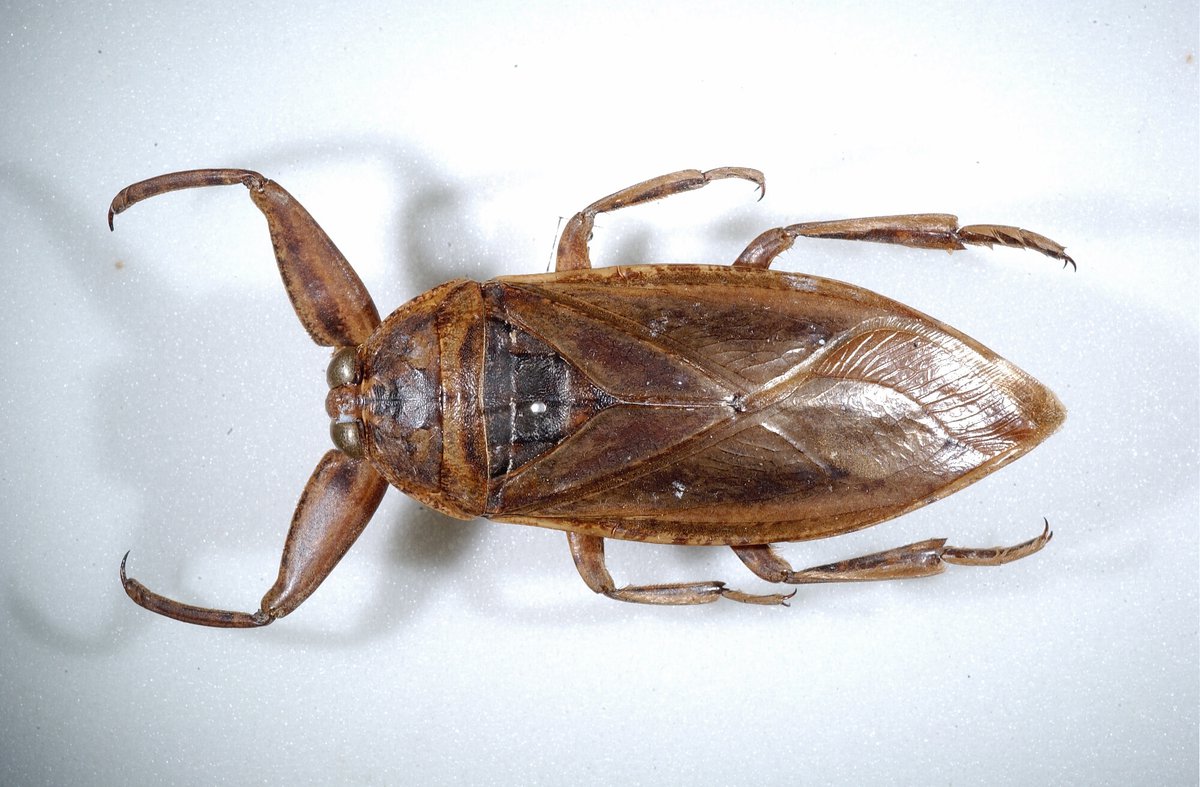
Giant Water Bug
Electric Light Bug; Giant Fishkiller
 Click to enlarge image
© Australian Museum
Fast Facts
-
Classification
- Genus
- Lethocerus
- Species
- insulanus
- Subfamily
- Lethocerinae
- Family
- Belstomatidae
- Super Family
- Nepoidea
- Infraorder
- Nepomorpha
- Order
- Hemiptera
- Class
- Insecta
- Subphylum
- Uniramia
- Phylum
- Arthopoda
- Kingdom
- Animalia
-
- Size Range
- 7 cm
Introduction
These bugs are formidable underwater predators. When hunting, Giant Water Bugs breathe using a syphon at their rear end which acts like a snorkel
Identification
These bugs, are the giants of the bug world - adults may be up to seven centimetres long.
Habitat
Giant Water Bugs live in fresh water, usually in still waters such as lakes.
Distribution
Giant Water Bugs are found in eastern Australia and the Indo-Pacific.
Feeding and diet
The Giant Water Bug positions itself head-down on a submerged plant stem and hunts by ambush, taking tadpoles, small fish, frogs, snails and aquatic insects. It catches prey with its grasping forelegs before piercing the body with its sucking mouthparts.
Other behaviours and adaptations
They fly between hunting sites and are attracted to lights, including car headlights. They are known to occasionally bite humans when disturbed - a very painful experience.