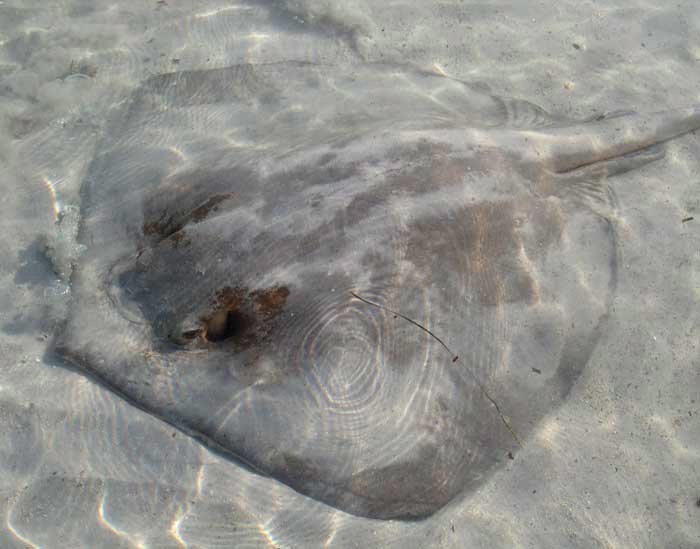
Estuary Stingray, Dasyatis fluviorum Ogilby, 1908
Brown Stingray, Estuary Stingaree, River Stingray
 Click to enlarge image
© Australian Museum
Fast Facts
-
- IUCN Conservation Status
- VULNERABLE (VU)
-
Classification
- Genus
- Dasyatis
- Species
- fluviorum
- Family
- Dasyatidae
- Order
- Myliobatiformes
- Class
- Condrichthyes
- Subphylum
- Vertebrata
- Phylum
- Chordata
- Kingdom
- Animalia
-
- Size Range
- The Estuary Stingray grows to a length of around 130 cm.
Introduction
The Estuary Stingray usually inhabits estuarine habitats including seagrass meadows and mangrove swamps. It was thought to a be common along the east-Australian coast but its population has declined as its habitat has become increasingly affected by coastal development.
Identification
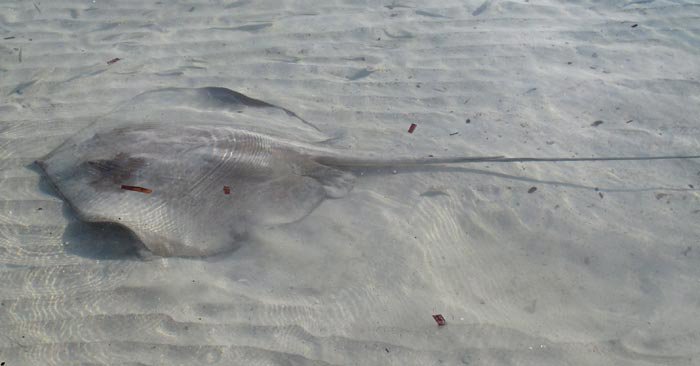
The species is yellow or brown in colour, with a long tail and a distinctive row of of spines starting at the base of the tail and reach the middle of the back. The disc is rhomboid-shaped.

Habitat
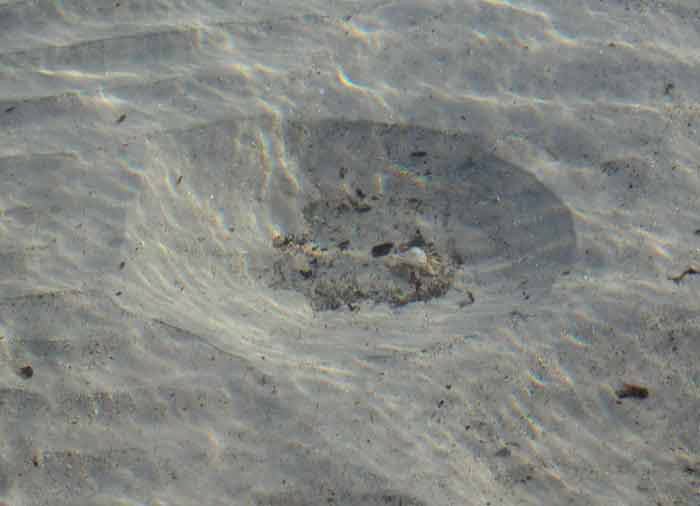
Estuaries with significant mangrove forests.
Distribution
The species occurs in the the Gulf of Carpentaria and along the east coast of Australia south to Sydney, New South Wales. Records of the species from New Guinea appear to be a mis-identifications.
The map below shows the Australian distribution of the species based on public sightings and specimens in Australian Museums. Click on the map for detailed information. Source: Atlas of Living Australia.
Conservation status
The Estuary Stingray is listed as Vulnerable by the IUCN.
References
- Hoese, D.F., Bray, D.J., Paxton, J.R. & G.R. Allen. 2006. Fishes. In Beesley, P.L. & A. Wells. (eds) Zoological Catalogue of Australia. Volume 35. ABRS & CSIRO Publishing: Australia. parts 1-3, pages 1-2178.
- Last, P.R. & J.D. Stevens. 2009. Sharks and Rays of Australia. Edition 2. CSIRO. Pp. 644, Pl. 1-91.