

Entomology
Entomology is the study of insects including beetles, flies, cicadas, moths, earwigs, fleas, bugs, cockroaches, bees, dragonflies and termites.
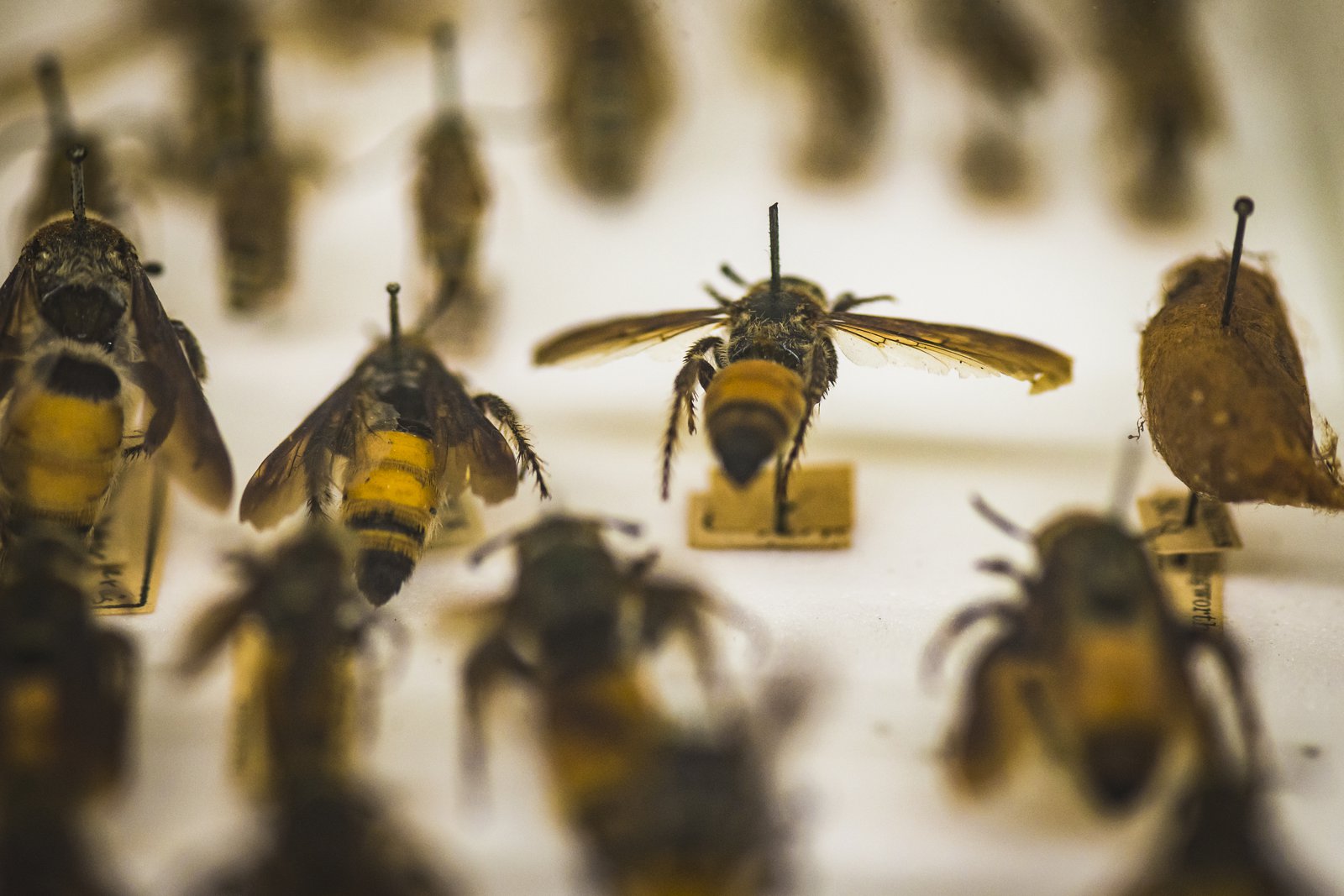


The Australian Museum Entomology Collection consists of an estimated 1.8 million pinned specimens, 100s of microscope slides and 500,000 lots (groups of individual specimens within a species) in ethanol. In total, the collection comprises 10-20 million individual insects, of which 30% has been digitised. Importantly, the collection is home to 4,702 Primary Types (the reference specimen for a given species) and 14,650 Secondary Types.
All hexapod arthropods are held in the collection but it has particular strengths in Diptera (flies), Lepidoptera (butterflies & moths), Psocids (bark-lice), Coleoptera (beetles) and Heteroptera (true bugs). The Australian Museum (AM) has the world's largest collections of bark lice and Australian acalyptrate flies along with major collections of antlions, alderflies and cicadas.
The geographic coverage of the AM's collection is focused on NSW, with good representative collections of insects from the Pilbara region of WA, Papua New Guinea, the Indonesian Archipelago and some western Pacific Islands. We also have a good representation of butterflies from around the world.
What is Entomology?
Learn more about the AM's Entomology Collection and why we collect insect specimens in our behind-the-scenes video revealing 'What is Entomology?'.
Australian Museum Entomology Collection
Insects are the most diverse group of terrestrial organisms, and this is reflected in the AM's entomological collection of specimens. It is the second largest insect collection in Australia and the largest collection in the AM. The entire collection is housed onsite at the Australian Museum in the Sydney CBD.
The growth of the collection commenced in 1885 following the appointment of the first Australian Museum entomologist Arthur Sidney Olliff. His research interests were beetles (Coleoptera), butterflies and moths (Lepidoptera). Prior to this, the main contributions to the Museum insect collection were specimens from George Masters, Alexander and George Macleay, and from Phillip Parker King.
Numerous important collections from amateur and professional entomologists have been donated to the Museum. For example, the G.A. Waterhouse Collection of Australian butterflies is considered to be the finest collection of these insects ever assembled by one collector.
The following factsheets feature images of specimens captured as part of the Australian Museum's Collection Enhancement Project (CEP) that is digitising our collection information.
Holotype, Syntypes and other specimen highlights
7 Fact Sheets in this sectionNews stories


Learn more


Christmas Beetles
Discover the wonderful diversity of Australia's most famous beetles with our identification guide. Browse the comprehensive catalogue of Christmas beetles, including photos, maps and more!
Find out more