Australian Museum Arachnology Collection

Arachnology is the study of the group of animals called arachnids. Arachnids include spiders, scorpions, harvestmen, ticks and mites.
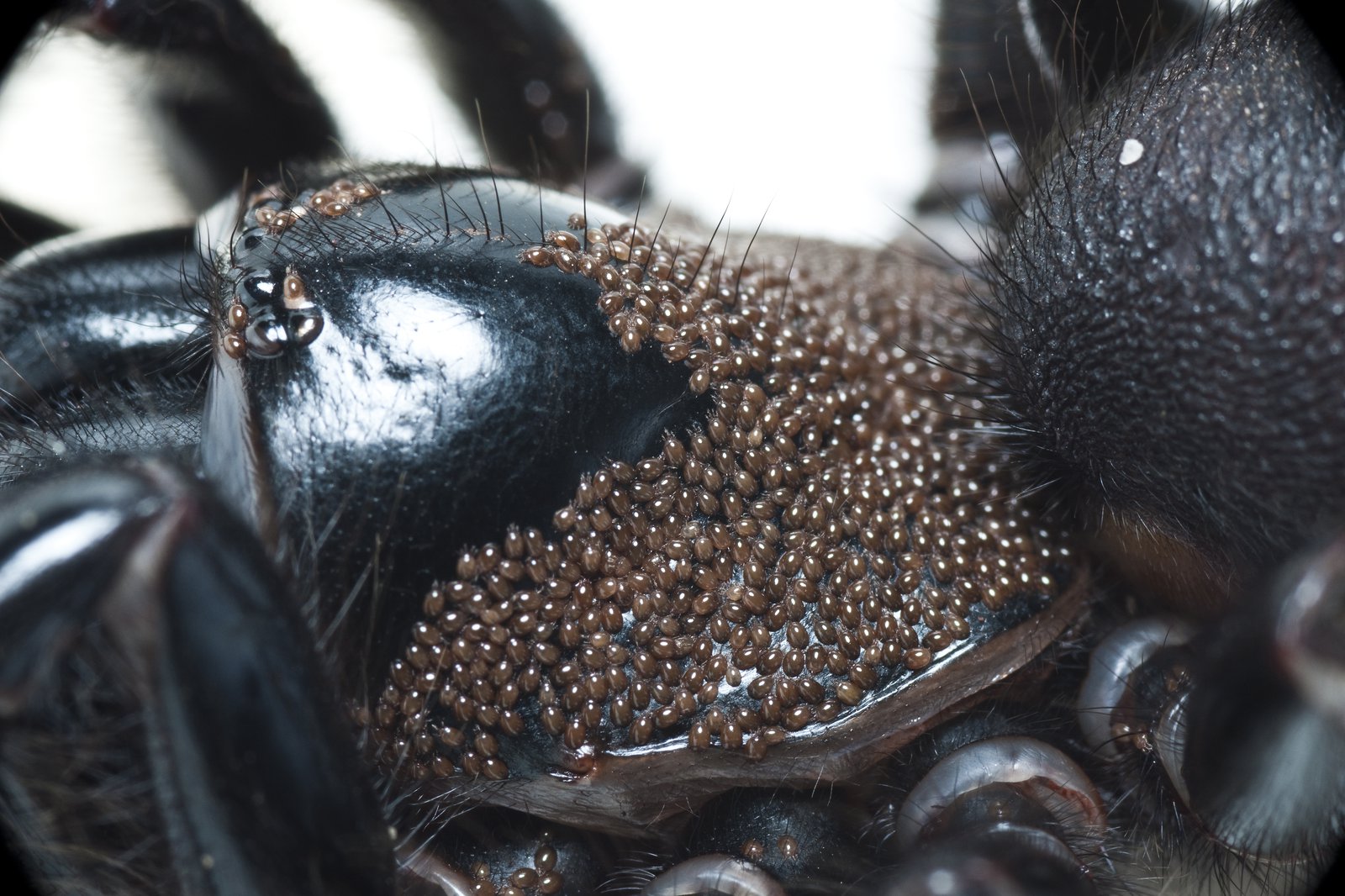
Portrait of a Net-casting Spider

Portrait of a Net-casting Spider
Marc Thumm © Marc Thumm

Arachnids are animals that have:

  • eight walking legs
  • two main body parts
  • jaws adapted for tearing or piercing prey
  • simple eyes
  • a skeleton outside the body

About the Collection

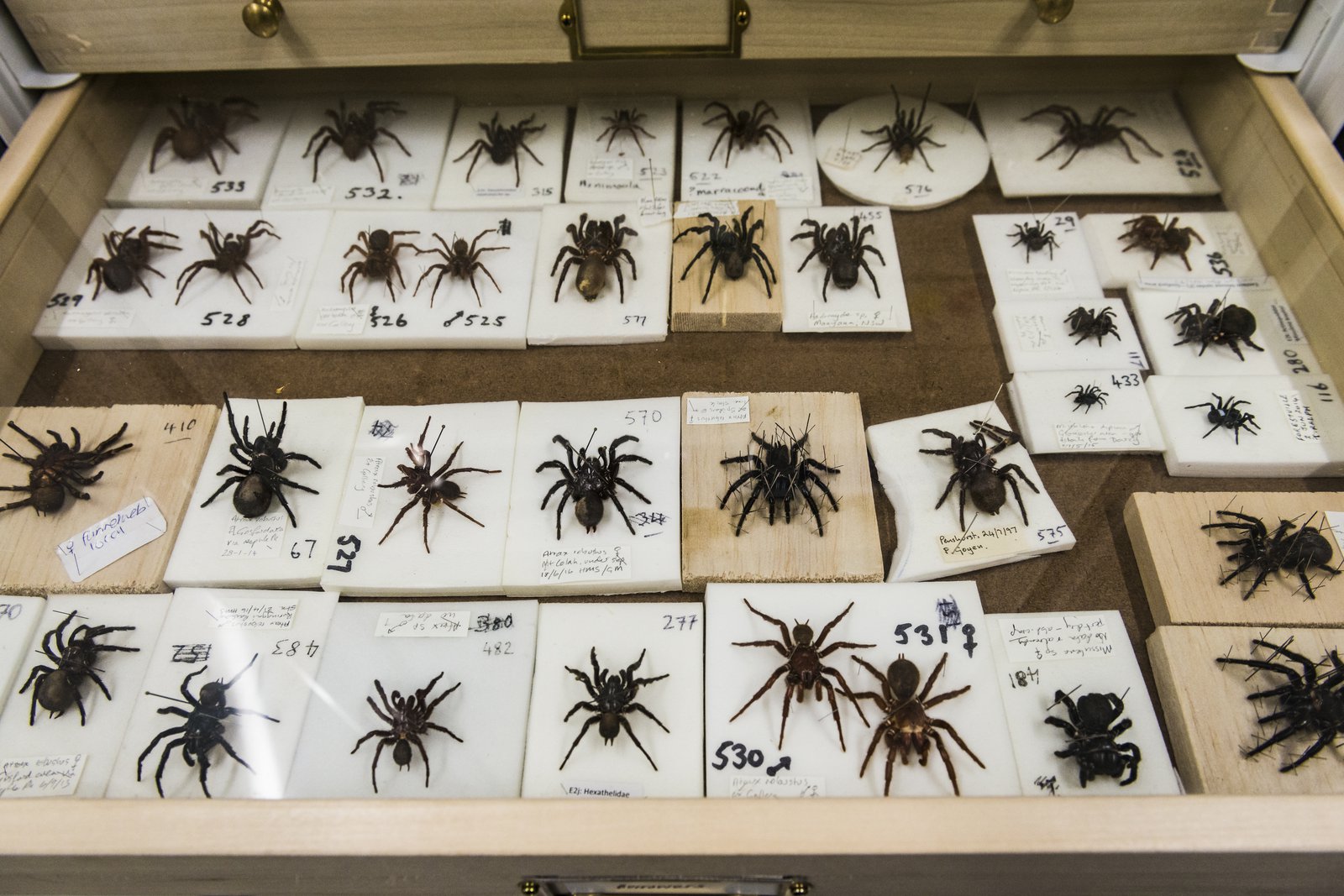
The Australian Museum Arachnology collection includes arachnids (spiders and their relatives), myriapods (centipedes and millipedes and their relatives), onychophorans (velvet worms), and tardigrades (water bears). The Arachnida represent the largest proportion of the collections, at about 95%. The collection includes many type lots of which a third are primary types (types are the original specimens from which the first description of a particular species is based).

The major portion of the Arachnology collection is spiders (Araneae) and harvestmen (Opiliones). The emphasis of the collection is on the New South Wales fauna, although there are significant holdings from other states and regions.

Highlights of the collection include the largest collection of funnel-web spiders in Australia and one of the largest collection of harvestmen (Opiliones) in Australia. The spider collection also includes examples of the world's most primitive living spiders, the Liphistiids from Southeast Asia. Of historical interest are the collections of W.J Rainbow and V.V Hickman, well known Australian arachnologists of previous eras.


Louise Carter , Technical Officer
Last Updated:

Tags Spiders,

7 comments

Louise Carter - 11.11 AM, 23 November 2011

@troglodites Your video sounds fantastic, you were very lucky indeed! As for your spider it is a trapdoor, but we are unable to say what kind.  If you contact the Western Australian Museum they should be able to help you out.

troglodites - 3.11 AM, 12 November 2011
Just returned to the UK after 7 weeks in Oz. Please can you identify the spider, parasitic wasp, (and ant if possible!) in the attached photograph taken on 25 September on the Kepwari Walk Trail, Esperance WA. Spider body length 4-4.5 cm guestimate. Watched the whole event from sting to burial, and got most of it on HD video - amazingly lucky! Many thanks

Comment Attachment

andrewhodgson - 4.09 AM, 27 September 2011
I wonder whether you would be able to identify this scorpion from Black Hill CP in the Adelaide Hills? I'm at a loss as to what it is, and have no books to help me! Any ideas would be much appreciated. It was a small scorpion, just a few cm long. Many thanks, Andrew

Comment Attachment

adrianex - 8.01 AM, 12 January 2011
I was recently moving sand that I had under a tarp and noticed the spider (see photo) hiding in the folds. There was no web and although uncovered made no attempt to move or to curl up and play dead. Could someone tell me what type it is. I have looked through lots of photos without any luck. I live in Frankston South on a property bordering woodland. Thanks
jpthornton - 12.12 AM, 12 December 2010
found this spider in our back yard in Narrogin,Western Australia but havent found what type it is can you identify it for me

Comment Attachment

Ondine Evans - 2.01 PM, 28 January 2010

Hello tobes! There are several ground-dwelling spiders that make underground burrows with silken nest chambers and retreats. Have a look at the Spiders section of the site for details, particularly at Trapdoor, Funnelweb, and Mouse Spiders under the heading: Australia's spider fauna.

tobes - 11.01 AM, 05 January 2010
Am brand new to ssite but have a querry,digging in garden to plant new plant when about a foot down truncatted a small "cavern" at one end. A spider approx. 1 inch, body semi elongated and plumpish darker brown in colour with black legs and thorax. unfortunately had hit with spade while digging. However from inside the "cavern" emerged approx identicals about two thirds size. again unfortunately as this was happening my partner unknowlingly turned hose on and dispersed them before i coul;d collect a specimen. Any clues i have never seen a sealed u8nderground nursery ? chamber like it

Report misuse